
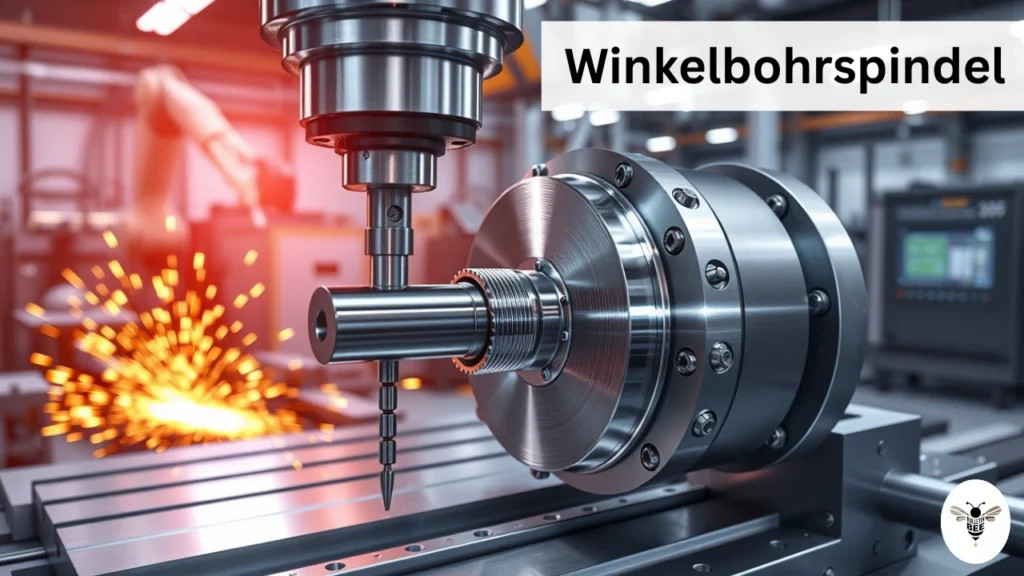
Reaching tight corners, angled surfaces, or hidden areas during machining is often challenging for engineers, workshop professionals, and manufacturers. Traditional vertical or horizontal spindles struggle to access complex spaces without repositioning the workpiece. The Winkelbohrspindel, also called an angle drilling spindle, solves this problem by enabling precise machining at different angles, typically 90°, while maintaining high torque, accuracy, and speed.
What is a Winkelbohrspindel?
A Winkelbohrspindel is a precision-engineered spindle that transmits rotational energy at an angle instead of straight. Using high-accuracy gears—like bevel, hypoid, or spiral bevel gears—it redirects motor rotation without losing torque or stability.
Key Features:
- Drilling, milling, tapping, and reaming in restricted areas
- Maintains torque, alignment, and cutting precision
- Compatible with CNC machines, robots, and modular setups
- Reduces setup and repositioning time
In essence, a Winkelbohrspindel acts like a flexible arm, reaching spaces normal spindles cannot while delivering consistent power.
Also Read


How Does a Winkelbohrspindel Work?
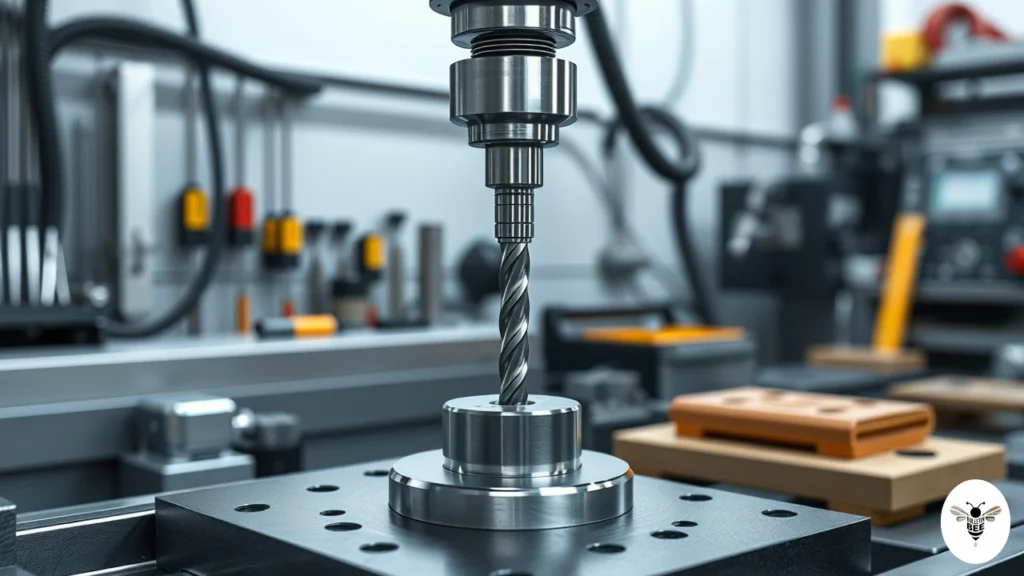
Main Components:
- Angular Gears: Redirect rotation at a fixed angle
- High-Precision Bearings: Reduce vibration at high speeds
- Spindle Shaft: Transfers torque to the tool
- Reinforced Housing: Protects internal mechanisms
- Cooling/Lubrication Paths: Prevent overheating
- Tool Holder: Holds drills, mills, or cutting tools
Working Process:
- A motor or machine spindle provides rotation.
- Angular gears redirect rotation at the desired angle.
- Spindle shaft outputs smooth, controlled rotation.
- The tool performs machining in confined or angled spaces.
Benefits:
- Smooth torque transmission under heavy loads
- Maintains accuracy and tool life
- Reduced vibrations for better surface finish
Advantages of Using a Winkelbohrspindel
Key Benefits:
- Access restricted spaces with ease
- Reduced setup and clamping time
- Improved alignment and accuracy in difficult areas
- Stable rotation for superior surface finish
- Extended tool life due to low vibration
- Automation-ready for CNC and robotic systems
- Lower operational costs and faster production
Productivity Gains:
- Faster setups and machining cycles
- Higher-quality output
- Reduced machine downtime
- Safer working conditions
- Excellent ROI for manufacturers
Applications of Winkelbohrspindel
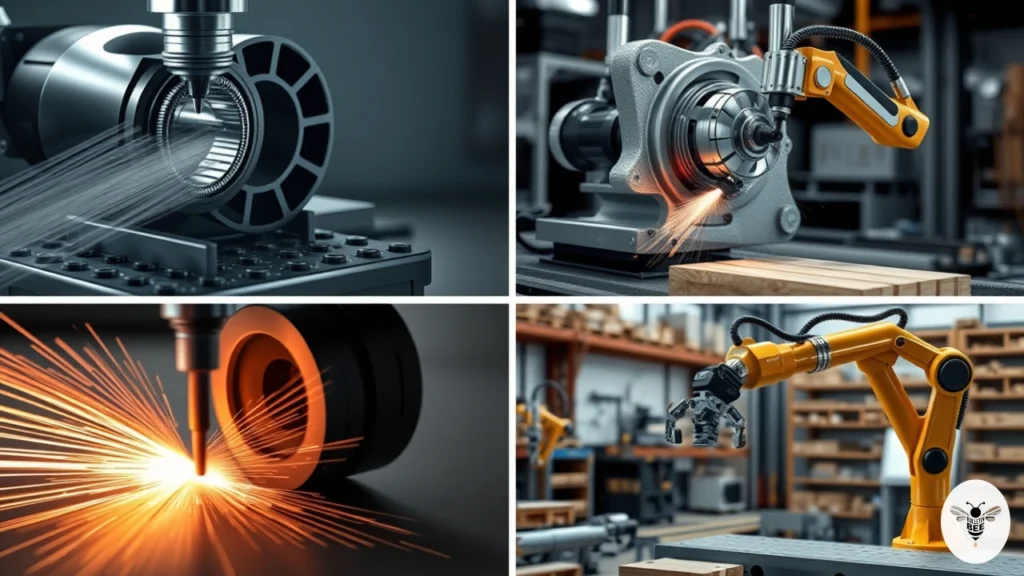
The versatility of Winkelbohrspindeln makes them useful in various industries:
Industries:
- Aerospace: Machining wing structures and turbine blades
- Automotive: Engine blocks, chassis, and gear housings
- Robotics: Flexible robotic arms for angled operations
- Tool and Die Making: Molds, cavities, and undercuts
- Construction & Carpentry: Precision drilling for furniture and tight joints
- Metal Fabrication: Multi-axis machining without repositioning
- Maintenance & Repair: On-site angled machining
Real-World Uses:
- Machining inside narrow housings
- Drilling holes at hard-to-reach angles
- Reducing workpiece repositioning for heavy parts
- Woodworking and artistic carving
Types of Winkelbohrspindeln
By Angle Configuration:
- 90° Angle Spindle: Standard angular drilling
- Adjustable Angle Spindle: Multi-directional machining
- Dual/Multi-Spindle: Parallel machining operations
By Drive System:
- Mechanical Gear-Driven: Durable for heavy metals
- Pneumatic: Lightweight for rapid movement
- Electric: Perfect for automated robotic systems
By Speed or Load:
- High-Speed: Up to 40,000 RPM for light materials
- High-Torque: For steel, titanium, and heavy milling
Technological Innovations
Modern Winkelbohrspindeln feature advanced materials and smart engineering.
Recent Innovations:
- Carbon-fiber housing for strength and lightness
- Hybrid ceramic bearings for durability and low heat
- Sensors for vibration, temperature, and load monitoring
- Industry 4.0 compatibility for predictive maintenance
- Automatic tool changers and modular designs
- Advanced cooling channels to prevent thermal wear
Future Possibilities:
- AI-assisted cutting optimization
- Self-learning digital control systems
- Ultra-light robotic angle spindles
Choosing the Right Winkelbohrspindel
Factors to Consider:
- Torque and RPM requirements
- Cooling and lubrication system
- Machine interface and compatibility
- Material hardness and working environment
- Angle range and tool holder type
- Size, weight, and automation needs
Recommended Spindles for Jobs:
- Aluminum & Plastics → High-speed spindle
- Steel & Titanium → High-torque mechanical spindle
- Robotics & Automation → Lightweight electric spindle
- Multi-plane operations → Adjustable angle spindle
Maintenance Tips
Checklist:
- Regularly lubricate gears and bearings
- Inspect for vibration or alignment issues
- Clean housing from chips and coolant
- Replace worn parts promptly
- Store in dry, stable conditions
- Use OEM spare parts
- Schedule preventive service checks
Warning Signs:
- Unusual noise or tool chatter
- Overheating
- Loss of torque or precision
Conclusion
The Winkelbohrspindel revolutionizes machining by allowing precision drilling, cutting, and milling in hard-to-reach spaces. Widely used in aerospace, automotive, robotics, and workshops, it improves productivity, accuracy, and safety. With ongoing innovations and integration with automation and Industry 4.0 systems, Winkelbohrspindeln are becoming lighter, smarter, and more efficient.
Investing in a high-quality Winkelbohrspindel ensures better performance, lower costs, and advanced machining capabilities. Whether for industrial manufacturing, prototyping, or creative woodworking, the angle spindle proves that small innovations can create big results at the perfect angle.