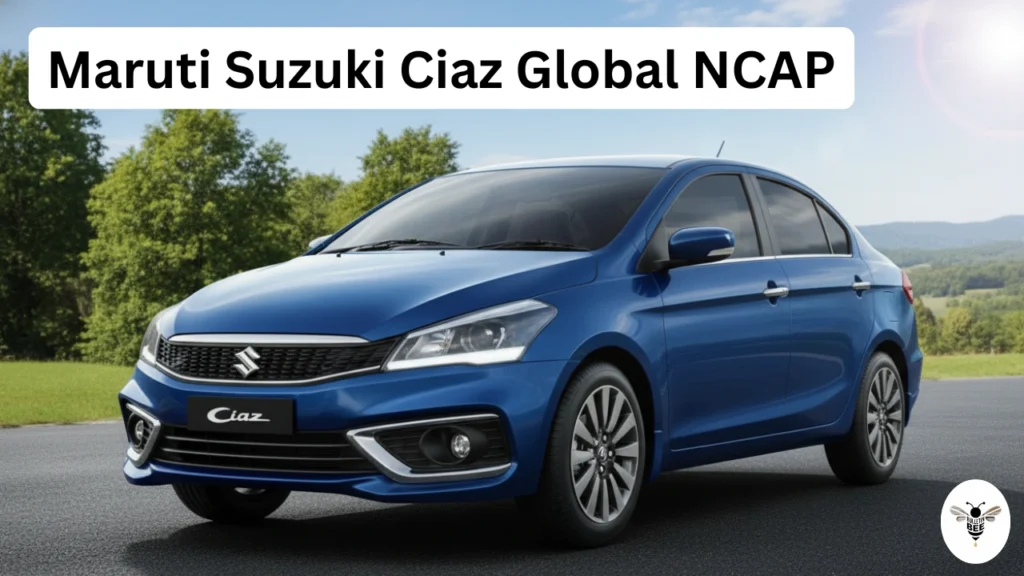
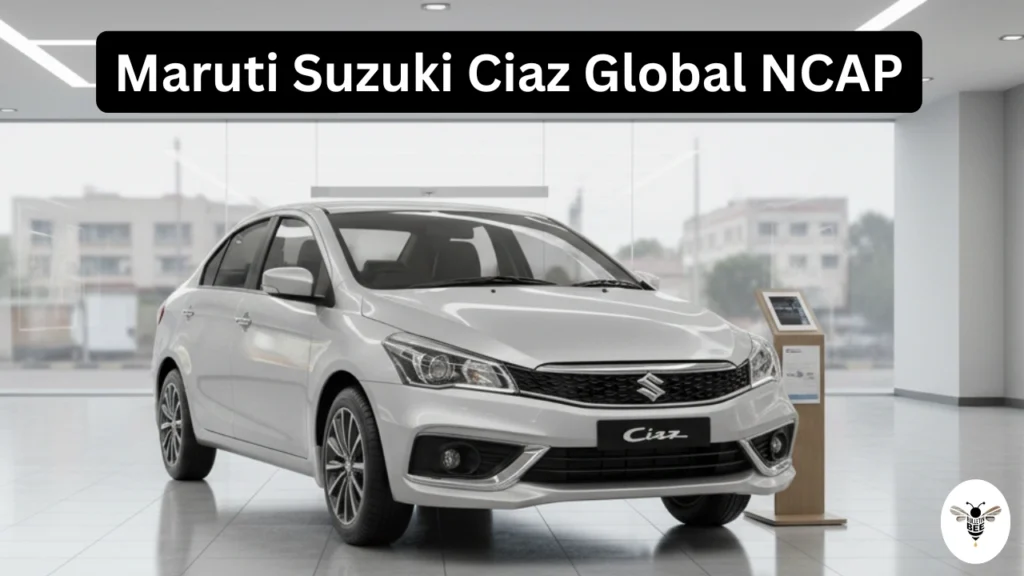
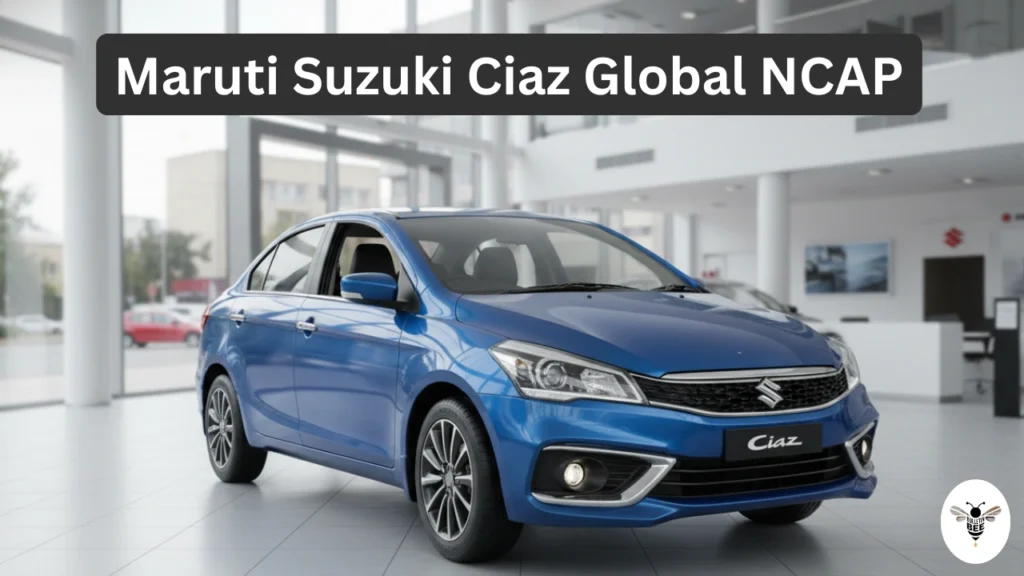
Maruti Suzuki Ciaz Global NCAP: The Maruti Suzuki Ciaz, once a popular mid-size sedan in India, has recently undergone the latest Global NCAP crash test, and the results are far from encouraging. Despite being known for its comfort, space and fuel efficiency, the car managed to secure only a 1-star rating for Adult Occupant Protection and 3-star rating for Child Occupant Protection, raising serious questions about its structural safety and suitability for modern-day requirements. Even though the Ciaz is discontinued for new sales, thousands remain on the road and continue to attract used-car buyers—making this report relevant for existing as well as potential owners.
Maruti Suzuki Ciaz Global NCAP Rating Summary
| Category | Rating | Score |
|---|---|---|
| Adult Occupant Protection (AOP) | ⭐ 1 Star | 20.86 / 34 points |
| Child Occupant Protection (COP) | ⭐⭐⭐ 3 Stars | 28.57 / 49 points |
Maruti Suzuki Ciaz Global NCAP Crash Test Performance Breakdown
Adult Safety Analysis
The Ciaz showed mixed results in adult occupant safety:
- Adequate protection for driver and passenger head & neck
- Weak chest protection, reducing final adult rating
- Marginal knee protection due to risk of dashboard structure impact
- Unstable body shell and footwell – unable to withstand higher crash loads
- Side impact test:
- Good for head & pelvis
- Adequate abdomen protection
- Weak chest protection again
- No side curtain airbags → side pole test not conducted
Child Safety Findings
Although child safety rating is comparatively better, it still has limitations:
- 28.57 / 49 COP score
- Dynamic crash test score: 24/24 – impressive head impact control
- ISOFIX rear child seats worked well for 18-month and 3-year dummies
- Lacking in features:
- No front airbag cut-off switch
- No ISOFIX for front passenger
- Failure in rear-center child seat installation
- Missing 3-point belts for all seats
Why The Score Matters
The automotive market is evolving rapidly with increasing focus on crash safety, structure quality, and standard safety features. With rivals like Skoda Slavia, Hyundai Verna & Volkswagen Virtus offering 5-star Global NCAP ratings, the Ciaz clearly falls behind current safety expectations.
Also Read

Key Factors Causing Low Rating
- Unstable body structure and footwell
- Only 2 airbags as standard
- Absence of side & curtain airbags
- Weak chest protection in both frontal & side tests
- Limited child safety hardware functionality
What the Ciaz Still Offers
Despite low safety performance, the Ciaz remains popular in the used market due to:
- Spacious rear seating & big cabin feel
- Reliable Maruti service network
- Good fuel efficiency
- Smooth driving dynamics for city use
- Value pricing in second-hand market
Ciaz Standard Safety Features (India-spec)
- Dual airbags
- Electronic Stability Control (ESC)
- ISOFIX child seat mounts
- Seat belt reminders
- ABS + EBD
Missing critical modern features:
- No 6-airbag option
- No curtain or side airbags
- No advanced driver assistance systems (ADAS)
Comparison With Rivals
| Model | Global NCAP Rating | Safety Features |
|---|---|---|
| Maruti Ciaz | ⭐ AOP / ⭐⭐⭐ COP | 2 airbags, ESC, ISOFIX |
| Hyundai Verna | ⭐⭐⭐⭐⭐ | 6 airbags, stronger body |
| Skoda Slavia | ⭐⭐⭐⭐⭐ | Solid structure, safety tech rich |
| VW Virtus | ⭐⭐⭐⭐⭐ | High crash stability |
Ciaz clearly loses footing against modern competition, especially for safety-conscious buyers.
Final Verdict
The Maruti Suzuki Ciaz delivers comfort, space and efficiency, but its performance in the Global NCAP crash test exposes significant safety limitations. With only a 1-star rating for adult protection, unstable body structure and missing side/curtain airbags, the sedan falls short of modern safety benchmarks set by its segment rivals. While it offers a 3-star child rating and stable city usability, buyers prioritizing safety, long-term ownership and highway usage may find better value in newer 5-star alternatives. Existing owners should consider additional safety practices like proper child seat use and defensive driving, while used-car buyers must weigh pricing benefits against safety compromises.