
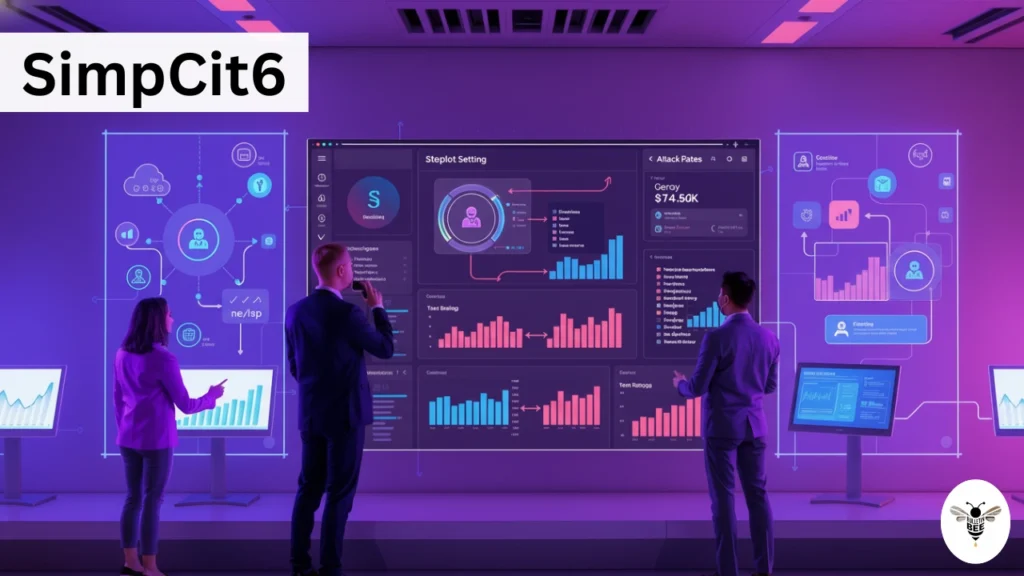
Today’s fast-paced digital world, businesses are constantly seeking tools that simplify workflows, boost productivity, and save time. Despite advances in technology, 73% of companies still rely on manual processes, which consume valuable resources and limit growth. Platforms like SimpCit6 automation platform offer an effective solution, enabling organizations to automate repetitive tasks, integrate multiple systems, and streamline operations—all in one place.
This guide provides an in-depth look at SimpCit6, covering its features, pricing, real-world applications, implementation strategies, and more. Whether you’re a small business owner exploring automation options or a large enterprise seeking scalable solutions, this article will help you make an informed decision.
What Is SimpCit6?
SimpCit6 automation platform is designed to simplify complex business processes without compromising on functionality. It serves as a central hub for workflow automation and integration, allowing businesses to:
- Automate repetitive tasks
- Integrate multiple software systems seamlessly
- Improve internal communication and collaboration
- Gain insights through real-time analytics
Who Can Use SimpCit6?
Also Read

- Solo entrepreneurs looking to automate small workflows
- Small and medium businesses aiming to increase efficiency
- Large enterprises requiring multi-department automation
Key Differentiators of SimpCit6
- User-Friendly Interface: Drag-and-drop workflow builder for beginners
- Scalable Architecture: Supports enterprise-level operations without performance issues
- Extensive Integration Library: 200+ pre-built connectors for popular tools like QuickBooks, Salesforce, Google Workspace, Slack, and Microsoft 365
- Security Compliance: HIPAA, SOC 2 standards, end-to-end encryption
- Community-Driven Development: Continuous updates based on user feedback
Unlike traditional automation tools, SimpCit6 balances simplicity and functionality, making it accessible to both non-technical users and advanced professionals.
SimpCit6 Features and Capabilities
The SimpCit6 automation platform provides a robust suite of features designed to enhance efficiency, simplify workflows, and drive measurable business results.
Core Features
- Workflow Builder: Drag-and-drop automation design reduces setup time by up to 60%
- Integration Hub: Connects with 200+ business applications to eliminate data silos
- Security Framework: End-to-end encryption, 2FA, and compliance-ready architecture
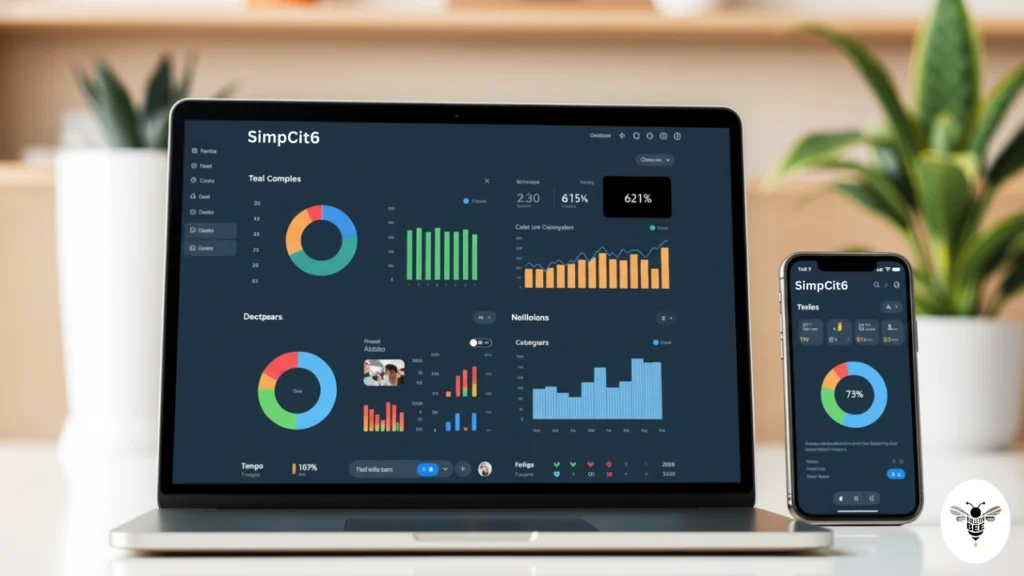
- Analytics Dashboard: Provides real-time metrics for faster and informed decision-making
- Collaboration Tools: Team workspaces, role permissions, and shared dashboards enhance productivity
Advanced Automation Capabilities
- Conditional logic and multi-step branching workflows
- API-first architecture for custom integrations
- Scheduled tasks and trigger-based automation
- Data transformation and mapping tools
- Multi-step approval processes with complete audit trails
Integration Ecosystem
SimpCit6 seamlessly integrates with a wide range of platforms, including:
- QuickBooks
- Google Workspace
- Salesforce
- Microsoft 365
- Slack
- Industry-specific applications
This compatibility allows businesses to incorporate SimpCit6 into existing tech stacks without disruption.
Performance and Scalability
- Cloud-based architecture ensures consistent performance
- Automatic scaling to handle growing transaction volumes
- Suitable for small tasks or complex enterprise workflows
User Interface and Experience
The SimpCit6 automation platform emphasizes ease of use while retaining advanced functionality.
Interface Highlights:
- Clean, intuitive layout reduces cognitive load
- Guided tutorials for first-time users
- Advanced configuration options accessible without cluttering the UI
- Accessibility features: keyboard navigation, screen reader support, high-contrast mode
- Mobile responsiveness for monitoring workflows on-the-go
New users typically create their first automation within 30 minutes, making the platform quick to adopt.
Implementation Guide: Getting Started
Implementing SimpCit6 successfully requires structured planning. Here’s a step-by-step guide:
Phase 1: Pre-Implementation Planning (Week 1)
- Assess current workflows and identify automation opportunities
- Document integration requirements and data flow
- Define ROI and success metrics
- Assemble an implementation team with clear roles
Phase 2: Technical Setup (Days 2-5)
- Verify system requirements (modern browser, stable internet, administrative access)
- Create SimpCit6 account and configure basic settings
- Install browser extensions or desktop apps
- Set up user accounts and role permissions
Phase 3: Initial Configuration (Days 6-10)
- Connect your first three business applications
- Test a simple automation workflow
- Configure dashboard, notifications, and backup procedures
Timeline Expectations:
- Basic setup: 2–4 hours
- First automation: 1–2 hours
- Team training: 1 week
- Full deployment: 2–4 weeks depending on complexity
The platform provides a guided setup wizard with contextual tips for smooth onboarding.
Evolution and Development History

The SimpCit6 automation platform represents the sixth generation of workflow automation software developed by experienced engineers who recognized the limitations of existing solutions.
Development Milestones:
- Initial Versions: Focused on complex enterprise automation, often too technical for beginners
- User Feedback Integration: Adjusted features to be more accessible without sacrificing advanced capabilities
- SimpCit6 Version 6 (2023): Released with improved performance, enhanced UI, and stronger security protocols
- Continuous Updates: Regular feature enhancements and bug fixes ensure the platform stays current
SimpCit6’s iterative development approach ensures long-term stability, backward compatibility, and industry-leading functionality.
Pricing Structure and ROI
SimpCit6 automation platform offers tiered pricing, making it accessible to businesses of all sizes.
Pricing Plans
| Plan | Cost/Month | Features | Ideal Users |
|---|---|---|---|
| Starter | $29 | 5 workflows, basic integrations | Solo entrepreneurs |
| Professional | $79 | 25 workflows, advanced features | Small-medium businesses |
| Enterprise | $199 | Unlimited workflows, priority support | Large organizations |
| Custom | Contact | Tailored solutions, dedicated support | Enterprises with unique needs |
ROI Examples
- Small business: Saves ~15 hours/week → $3,600 monthly savings; $79/month plan → 4,400% ROI
- Enterprise: Can save $50,000+ annually via automation, faster responses, and improved accuracy
Cost Comparison:
- SimpCit6 is competitive vs. Zapier ($19.99–$599/month) and Microsoft Power Automate ($15–$40/user/month)
- Benefits include unlimited users (except Starter) and extensive integration support
Real-World Applications and Case Studies
Case Study 1: Healthcare Practice
- Challenge: Manual patient record updates, appointment scheduling, and insurance verification
- Implementation: Automate patient intake, EHR integration, appointment reminders
- Results:
- 65% reduction in admin time
- 23% increase in patient satisfaction
- $27,000 annual labor savings
Case Study 2: E-commerce Inventory
- Challenge: Managing 5,000+ products, order delays, overselling
- Implementation: Centralized inventory system, automated stock updates, alerts
- Results:
- 95% reduction in inventory discrepancies
- 40% increase in customer satisfaction
- 18% monthly revenue growth
Case Study 3: Marketing Agency
- Challenge: Multi-client project management, reporting delays
- Implementation: Automated campaign reports, unified client dashboard
- Results:
- 85% faster report generation
- 30% improvement in client retention
- $180,000 annual profit increase
Small Business vs Enterprise Use
Small Business
- Ideal for automating routine tasks without IT staff
- Common use cases: lead management, email workflows, basic reporting
- Scalable pricing allows gradual expansion
Enterprise
- Advanced automation for multi-department workflows
- Integrates with legacy systems and proprietary tools
- Custom API connections for unique organizational needs
Pros and Cons
Strengths
- Intuitive, beginner-friendly interface
- Extensive integration library
- Strong security and compliance features
- Competitive pricing with proven ROI
- Active community and support resources
- Scalable architecture for growth
Limitations
- Advanced customization may need technical skills
- Some enterprise features limited to higher-tier plans
- Mobile app functionality less extensive
- Setup complexity increases with multiple integrations
Support, Training, and Resources
Support Channels:
- Live chat (8 AM – 8 PM EST)
- Email ticketing (24-hour response)
- Knowledge base: 500+ articles
- Video tutorials for basic to advanced users
- Community forums for peer support
Training Programs:
- Role-based learning paths for end-users and admins
- Hands-on exercises and real-world scenarios
Certification Options:
- Validate platform expertise
- Credential for career advancement
- Covers administration, workflow design, and integrations
Conclusion
SimpCit6 stands out as a powerful yet approachable automation platform that successfully bridges the gap between simplicity and enterprise-grade functionality. With its intuitive interface, extensive integration ecosystem, strong security framework, and proven real-world ROI, it is well-suited for businesses of all sizes looking to streamline operations and scale efficiently. While advanced customization may require some technical expertise, the platform’s transparent pricing, robust support, and scalability make it a smart long-term investment for organizations committed to digital transformation and workflow optimization in 2025 and beyond.